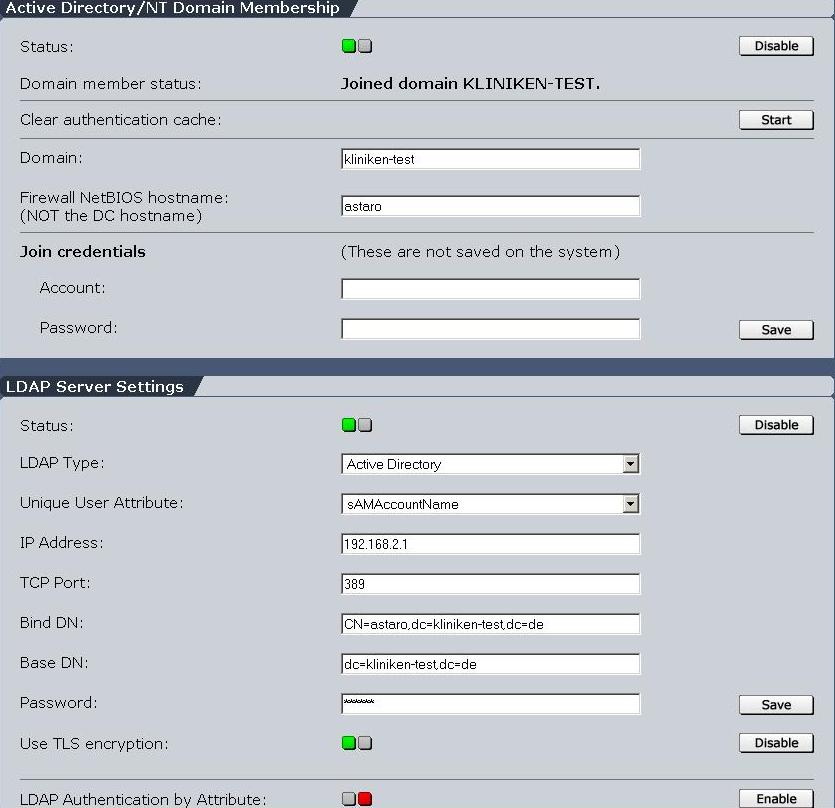
Using cleartext machine password
cred_create
cred_create
cred_assert
[18483]: request interface version
[18483]: request domain name
[18483]: lookupname kliniken-test+roehsa
rpc: name_to_sid name=roehsa
name_to_sid [rpc] roehsa for domain KLINIKEN-TEST
[18483]: lookupsid S-1-5-21-606747145-789336058-1343024091-1112
[18483]: lookupsid S-1-5-21-606747145-789336058-1343024091-513
[18483]: lookupsid S-1-5-21-606747145-789336058-1343024091-1104
Using cleartext machine password
cred_create
cred_create
cred_assert
[18483]: request interface version
[18483]: request domain name
[18483]: lookupname kliniken-test+roehsa
rpc: name_to_sid name=roehsa
name_to_sid [rpc] roehsa for domain KLINIKEN-TEST
[18483]: lookupsid S-1-5-21-606747145-789336058-1343024091-1112
[18483]: lookupsid S-1-5-21-606747145-789336058-1343024091-513
[18483]: lookupsid S-1-5-21-606747145-789336058-1343024091-1104
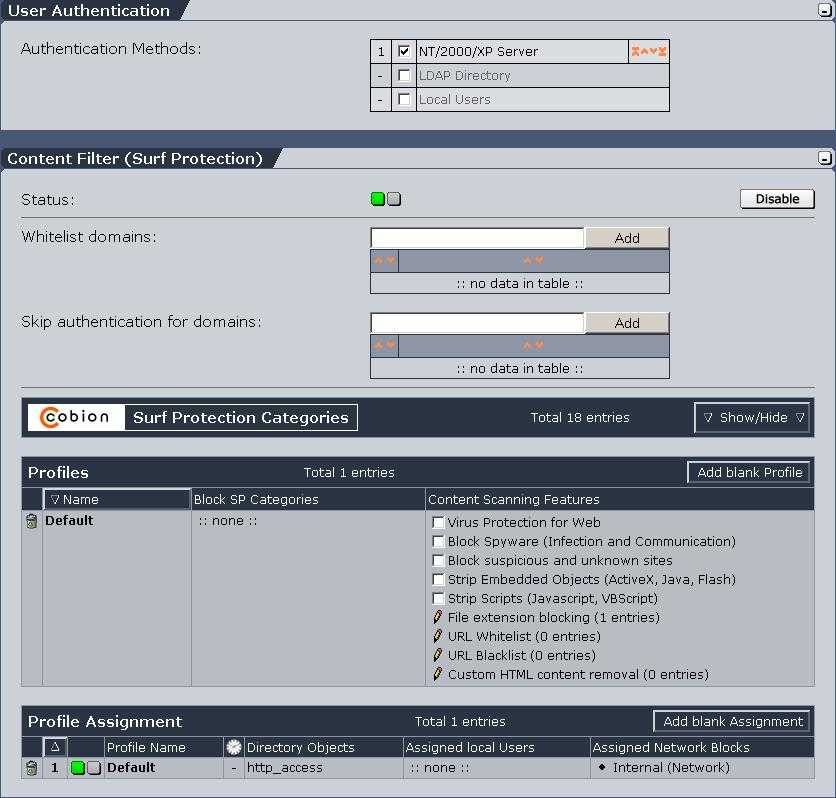
In the Astaro3 pic, should any not be in the allowed networks area? Would
it not be the DC Server on the internal net allowing? I think if any is used
for auth will allow open proxy relay
In User Authentication mode, each client must authenticate itself to the proxy before using it. This mode is useful if you want to collect user-based proxy usage data or if you want to assign user-based Surf Protection profiles. The controls for the selection of the authentication mechanisms and the allowed local users only become visible if this option is selected.
When an Active Directory/NT domain membership has been set up under System >> User Authentication, you can select this option here. This has the effect that NTLM user authentication will be used to authenticate clients. This is only guaranteed to work with Internet Explorer. Other browsers may support NTLM authentication too when they are run on a Windows system. To be able to use the proxy, a user MUST be in a group called "http_access" in the domain.